
Nobody Writes It Down
The drinks industry loses its knowledge every time somebody leaves. This is my attempt to stop that.

Knowledge in the drinks industry lives in people, not in systems.
It sits with the folks who have opened four markets and can tell you which one will take a new brand and which one will eat it. It sits with the woman who has watched three hundred launches and knows within a week which ones will still be listed next year.
Then they change jobs. Or retire. Or leave the industry altogether.
And it goes with them.
This is why the same mistakes keep repeating.
Not because founders are careless. Because the evidence is not available to them. Every new brand starts from zero, pays for its own education, and carries that education out the door when it goes.
The market entered too early. The distributor signed before there was any demand to distribute. The listing everybody celebrated that never reordered once. The first commercial hire made because a target needed hitting, not because there was a system for them to run.
Each of those costs real money and two or three years of someone’s life.
And each of them has already been made, many times over, by people who would happily tell you about it if anyone asked.
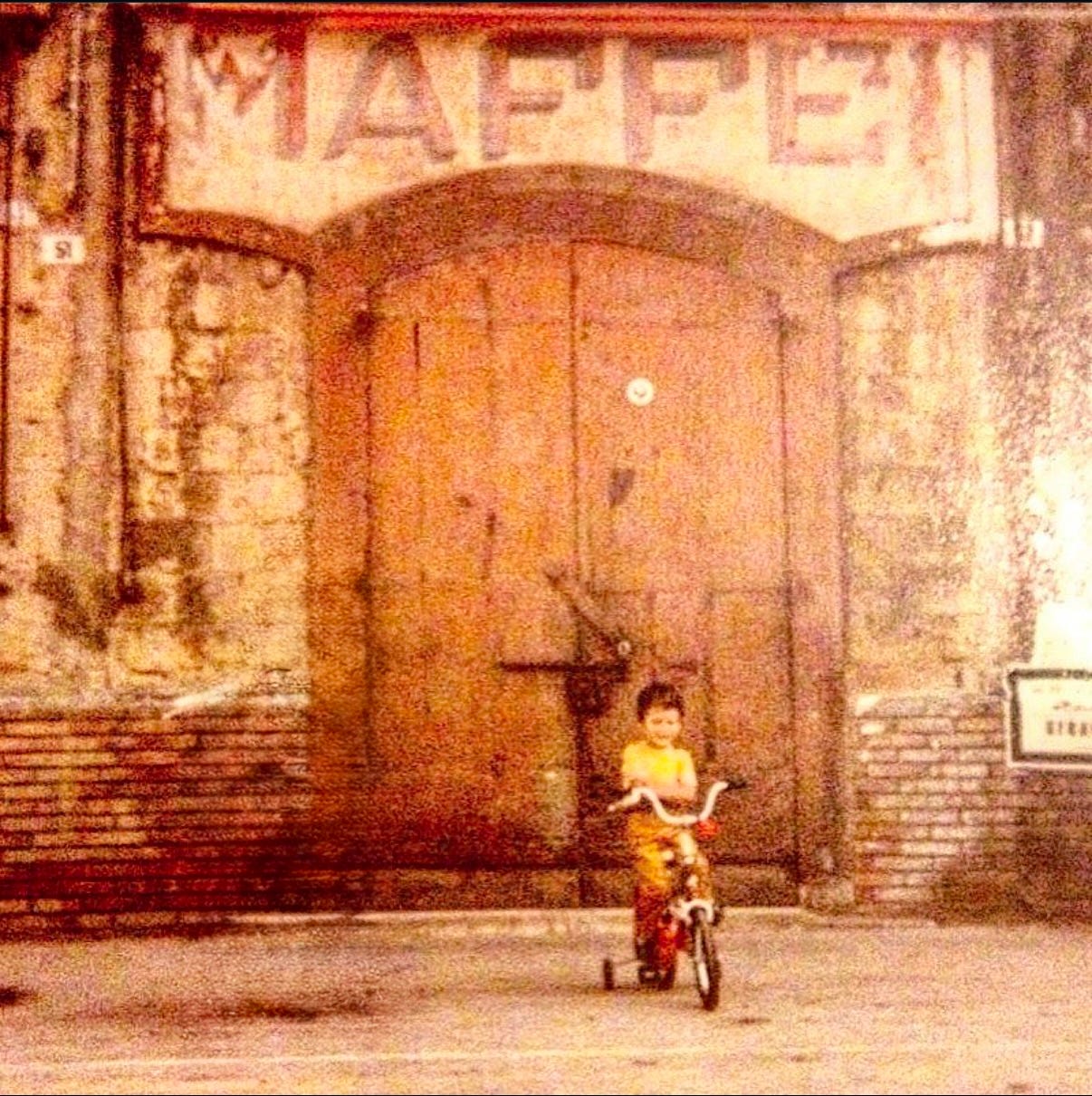
I watched this happen inside my own family.
My great-grandfather and my grandfather ran a food and beverage distribution business in Southern Italy for a hundred years.
It survived 2 World Wars, but when it closed, everything they understood about that trade closed with it. None of it was written down.
My mother taught Latin. She used to say: verba volant, scripta manent.
Words fly away. Writing remains.
So I started writing it down.
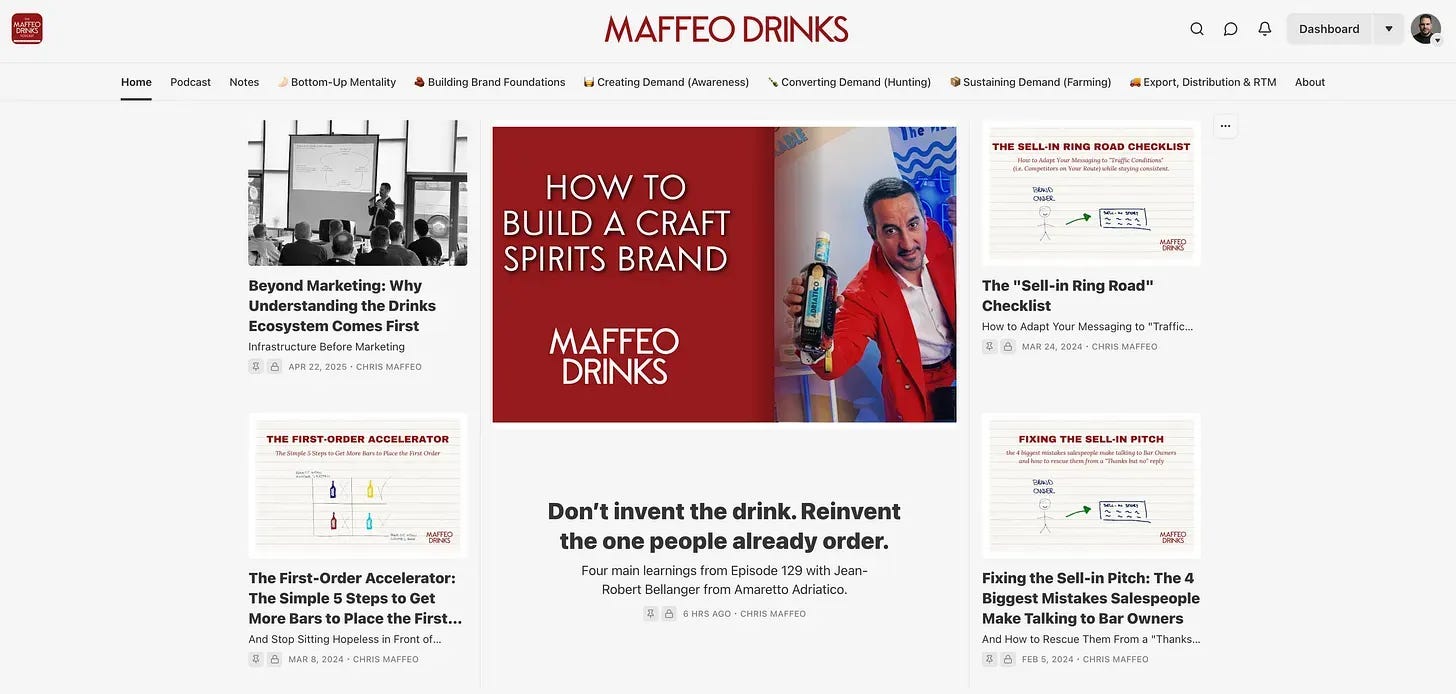
For more than three years, I have recorded conversations with the people who actually build drinks brands. Founders, distributors, ambassadors, bartenders. Over a hundred of them.
Those conversations are the raw material. They are not the product.
Every episode now gets a written deep dive. Not a summary of what was said.
What the person actually did, what it cost them, and what it tells us about how this industry behaves when nobody is presenting.
Then there is the layer that matters most, and it only appears when you put the conversations side by side.
The same failures show up across categories, across markets, across decades.
They are almost never failures of product or of effort.
They are failures of sequence.
Distribution built before demand exists. Export chased before the home market is proven. Headcount added before there is a system for it to run.
A brand does the right things in the wrong order, and the order is what kills it.
You cannot see that inside a single episode. Every guest believes their story is specific to them. It takes a hundred of those stories before the shape becomes obvious.
That is what this publication is for.
Here is what you will find in it. A written deep dive for every episode. Cross-episode pieces whenever a pattern is strong enough to name.
And the Bottom-Up Cut, the shorter format, for the moments that stand on their own.
No frameworks invented at a desk. No theory. Just what the field keeps proving, written down before the people who know it move on.
You can pay for these lessons the way my guests did.
Or you can read what they already paid for.
Brands are built bottom-up.
Institutional memory is such an underrated concept, and I see it in many of the companies I spend time with. I try to document as much as possible of the choices to create a process for them to learn from the decisions we made and the decisions we didn't make (in the sense of the execution we chose, the path we decided not to follow).
Unfortunately, many companies ignore that, and they keep making the same mistakes.
And they are even surprised by those....